Every AV receiver is really two products squeezed into one chassis: a processor that decodes, switches, and routes your sources, and a set of built-in power amp channels that actually drive your speakers. That combination is convenient, but it's also a compromise — the amp section shares a power supply, a chassis, and a thermal budget with everything else the receiver is doing.
A separate power amplifier removes that compromise entirely. You keep your receiver or pre-processor for switching, room correction, and decoding, then hand the actual amplification off to a chassis built to do just that — bigger transformer, more capacitance, more headroom, and a lot more current on tap for the moments a movie actually needs it.
This category started with the amp currently running our own front three channels, the Aperion Audio Energy Pro E3H, and now covers Aperion's full Energy amplifier lineup — from a 2-channel stereo amp to a 7-channel model that can drive an entire 7.1 system on its own. Not sure how much power you actually need before reaching for a separate amp? See our amplifier power guide, or our AV receiver vs. separates guide for the actual signs it's time to upgrade.
More clean power on tap
Dedicated amps carry bigger transformers and far more capacitance per channel than a receiver's internal amp section, so loud passages stay clean instead of compressing or straining.
Built to run, not just survive
A receiver's amp section shares one chassis and one thermal budget with the processor. A separate amp has nothing to do but amplify, with heat sinks sized for continuous, demanding use.
Better grip on difficult speakers
Low-impedance or low-sensitivity speakers — big towers, some center channels — need current a modest receiver amp can't always deliver. A dedicated amp keeps that control in check.
| Amplifier | Best for | Price | |
|---|---|---|---|
| Energy E22 channels | A stereo pair, or just the front L/R | $1,399 | Details ↓ |
| Energy Pro E2H2 channels, high power | Demanding towers on a 2-channel system | $2,499 | Details ↓ |
| Energy E33 channels | Front L/C/R at standard power | $1,599 | Details ↓ |
| Energy Pro E3H3 channels, high power | Front L/C/R with real headroom to spare | $2,999 | Details ↓ |
| Energy E55 channels | A full 5.0/5.1 layout off one amp | $2,199 | Details ↓ |
| Energy E77 channels | A full 7.1 or 5.1.2 Atmos layout off one amp | $2,599 | Details ↓ |
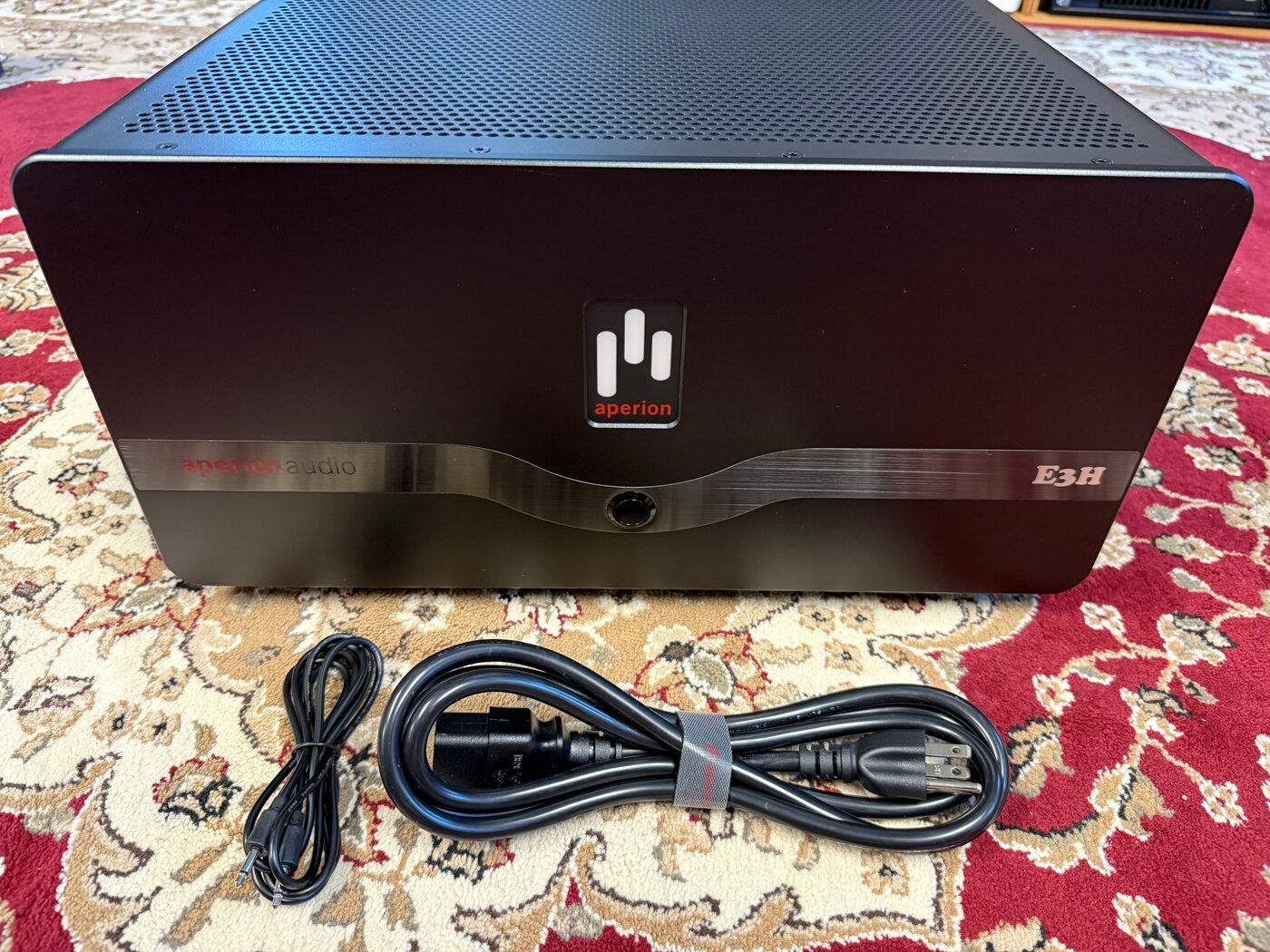
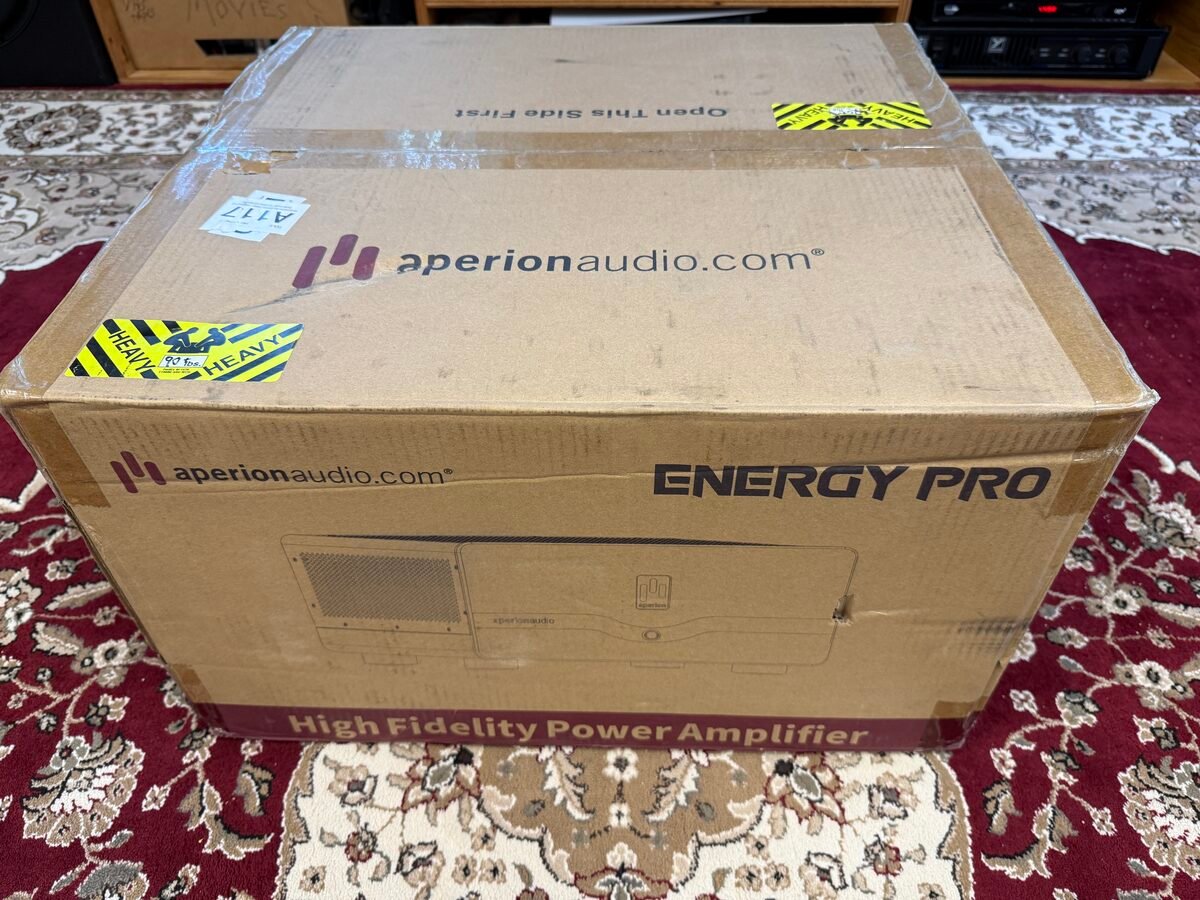
Why we picked it: This is the amp we just installed on our own left, center, and right channels, and it's made a bigger difference than we expected. The soundstage opened up noticeably — more separation between voices and effects, more sense of space behind the screen — and the build quality is the kind you notice the moment you lift the box. Aperion's customer service through the buying process was excellent too.
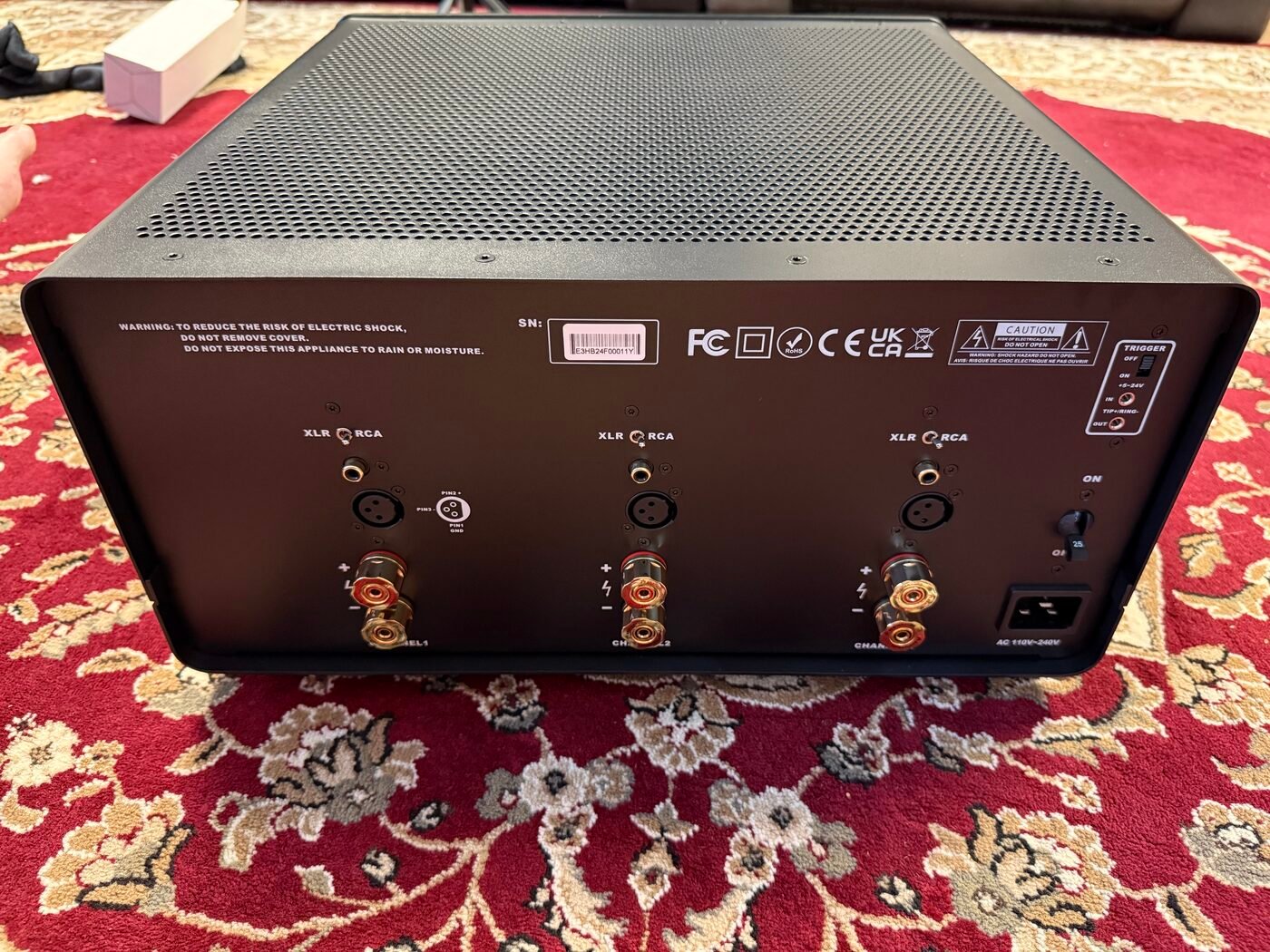
The E3H is a Class AB design putting out 600W per channel at 8Ω and 900W per channel at 4Ω with all channels driven, purpose-built to handle the front three speakers in a 5.1, 7.1, Atmos, or DTS:X system. It's meant to be fed by your AV receiver or processor's pre-outs — via balanced XLR or unbalanced RCA — rather than replacing it, so your existing receiver keeps doing the decoding and switching while the E3H takes over the actual amplification.
- Power: 600W/ch @ 8Ω, 900W/ch @ 4Ω (all channels driven)
- Design: Class AB, dual toroidal transformers, 80,000µF capacitance per channel
- Inputs: Balanced XLR and unbalanced RCA per channel, with input selector switches
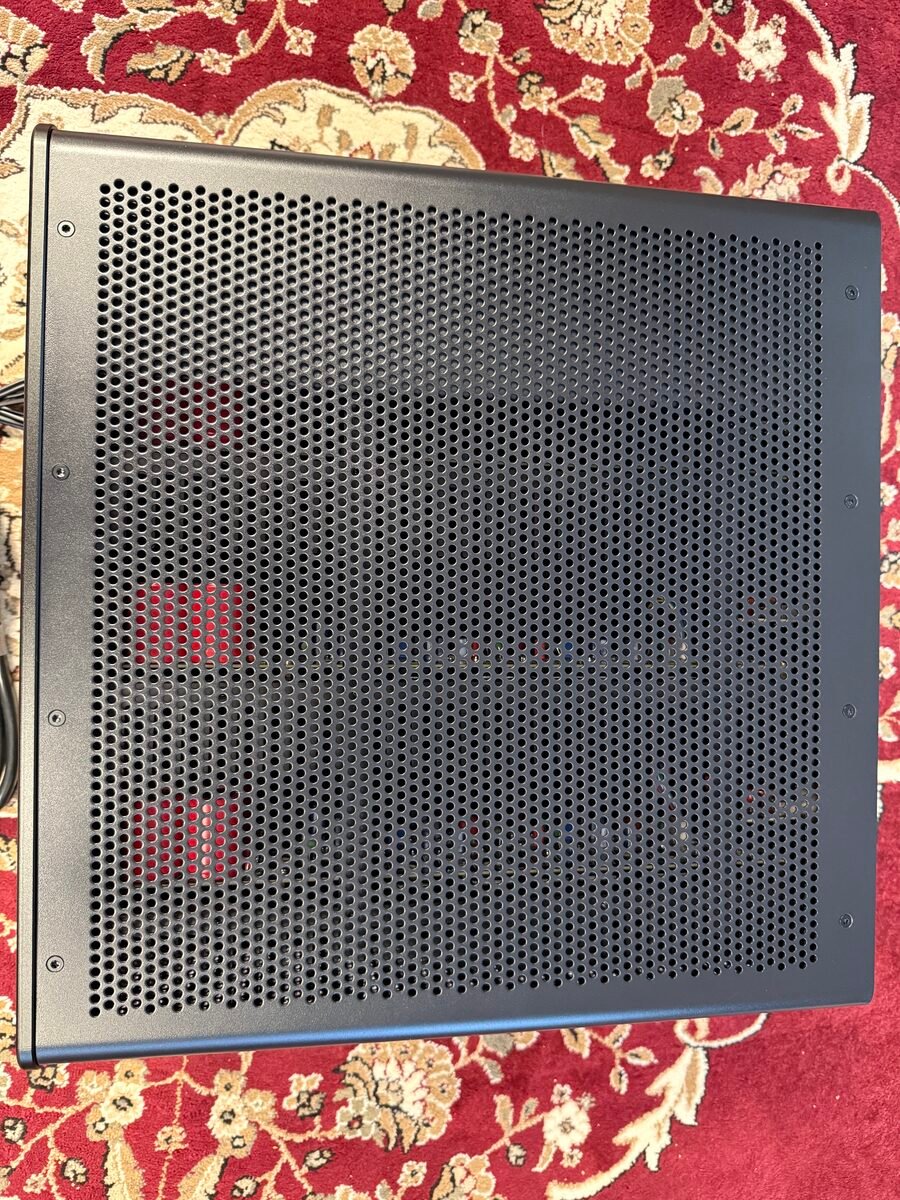
- Cooling: Fully passive — large heat sinks, no fans
- Convenience: 12V trigger in/out for auto power-on and daisy-chaining amps
- Best for: Front L/C/R channels in a 5.1–7.1 or Atmos/DTS:X separates system
- Warranty: 5-year warranty with lifetime support
| Spec | Aperion Energy Pro E3H |
|---|---|
| Channels | 3 |
| Power @ 8Ω, all channels driven | 600W RMS per channel |
| Power @ 4Ω, all channels driven | 900W RMS per channel |
| THD+N | ≤0.015% |
| SNR | 96dB (RCA) / 108dB (XLR) |
| Frequency response | 10Hz–32kHz (±1dB) |
| Load impedance | 4–16Ω |
| Cooling | Passive (no fans) |
| Weight | 81.6 lb / 37 kg |
| Dimensions (H x W x D) | 9.1" x 17.2" x 17" |
| Warranty | 5 years, lifetime support |
The rest of the Energy lineup
The E3H above is built for a front three-channel upgrade specifically. These five cover every other configuration, from a simple stereo pair to an entire 7.1 system running off a single amplifier.
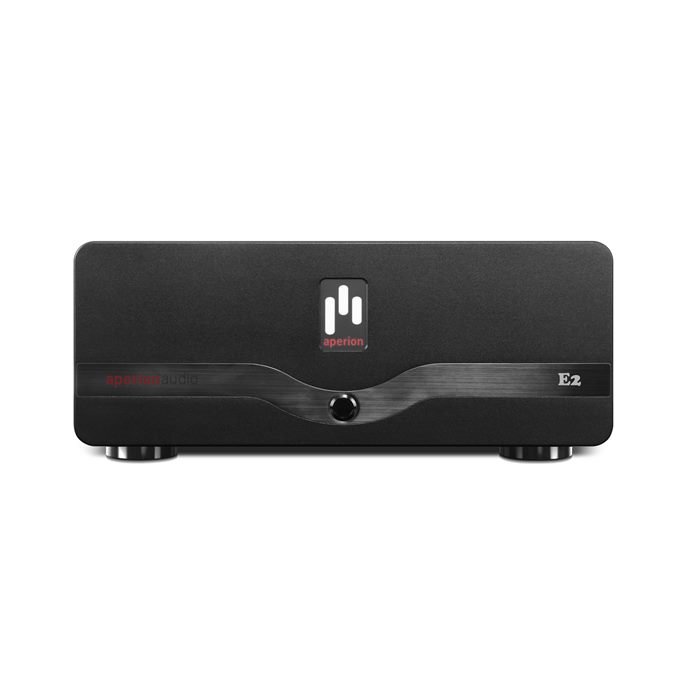
Why it's on this list: The entry point into the Energy lineup, and the right call for two use cases: a dedicated 2-channel stereo or vinyl system with no receiver in the signal path at all, or simply lifting the front left/right channels of a home theater system off the receiver's internal amp while everything else — center, surrounds, height — stays on the receiver. At 200W per channel into 8Ω, it comfortably out-muscles what any AV receiver's built-in amp section delivers.
- Power: 200W/ch @ 8Ω, 330W/ch @ 4Ω (both channels driven)
- Design: Class AB, toroidal transformer, 40,000µF capacitance per channel
- Inputs: Balanced XLR and unbalanced RCA per channel
- Cooling: Fully passive — no fans
- Best for: A stereo system, or the front L/R of a home theater
- Warranty: 3-year warranty with lifetime support
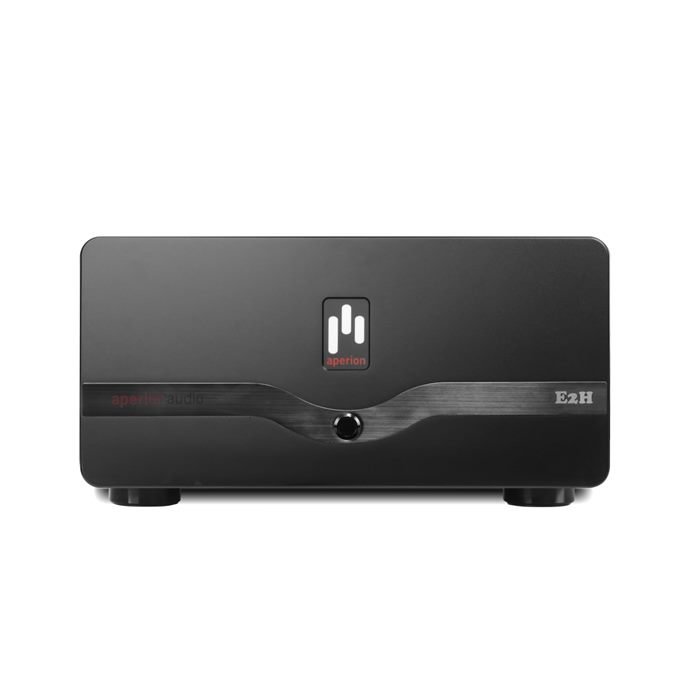
Why it's on this list: The stereo sibling to our own E3H, built on the same "Pro" platform — dual toroidal transformers with bi-filar windings and 80,000µF of capacitance per channel, roughly double the E2's. At 650W per channel into 8Ω, this is for a 2-channel or stereo Hi-Fi system built around genuinely demanding, low-sensitivity towers, or a large room where the standard E2 would be working too hard.
Worth knowing: This is not a home-theater amp with channels to spare for surrounds — it's a stereo amplifier, full stop. If you want this level of power across three front channels instead of two, that's exactly what the E3H below is for.
- Power: 650W/ch @ 8Ω, 950W/ch @ 4Ω (both channels driven)
- Design: Class AB, dual toroidal transformers (bi-filar), 80,000µF capacitance per channel
- Inputs: Balanced XLR and unbalanced RCA per channel
- Cooling: Fully passive — no fans
- Best for: A high-power stereo or Hi-Fi system, or demanding front L/R towers
- Warranty: 3-year warranty with lifetime support
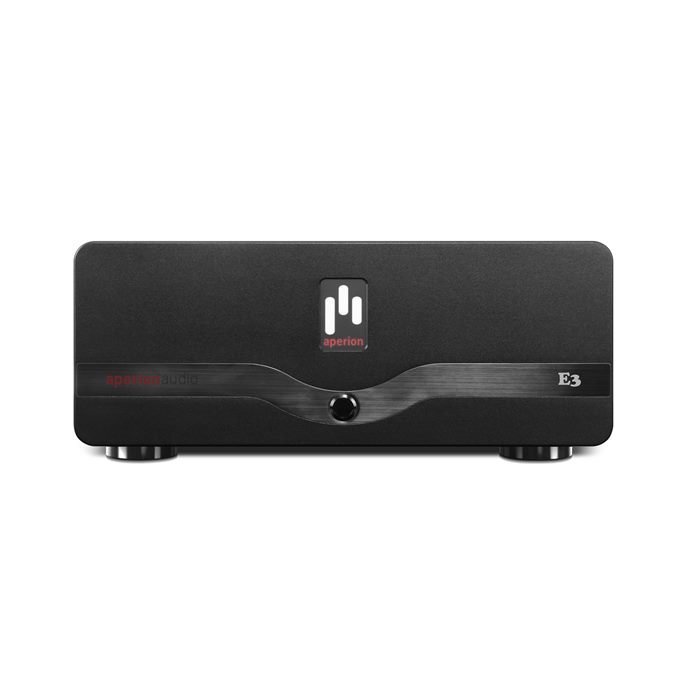
Why it's on this list: The standard-power version of the amp we run ourselves — same idea of taking the front left, center, and right off the receiver's internal amp section so it can focus its processing and remaining amp channels on surrounds and height, just without the E3H's extra headroom. At 190W per channel into 8Ω, it's already more than most receivers deliver on those three channels, and a genuine step up without paying for power a smaller or more efficient front stage won't use.
- Power: 190W/ch @ 8Ω, 300W/ch @ 4Ω (all channels driven)
- Design: Class AB, toroidal transformer, 40,000µF capacitance per channel
- Inputs: Balanced XLR and unbalanced RCA per channel
- Cooling: Fully passive — no fans
- Best for: Front L/C/R in a 5.1–7.1 or Atmos/DTS:X system, standard power needs
- Warranty: 3-year warranty with lifetime support
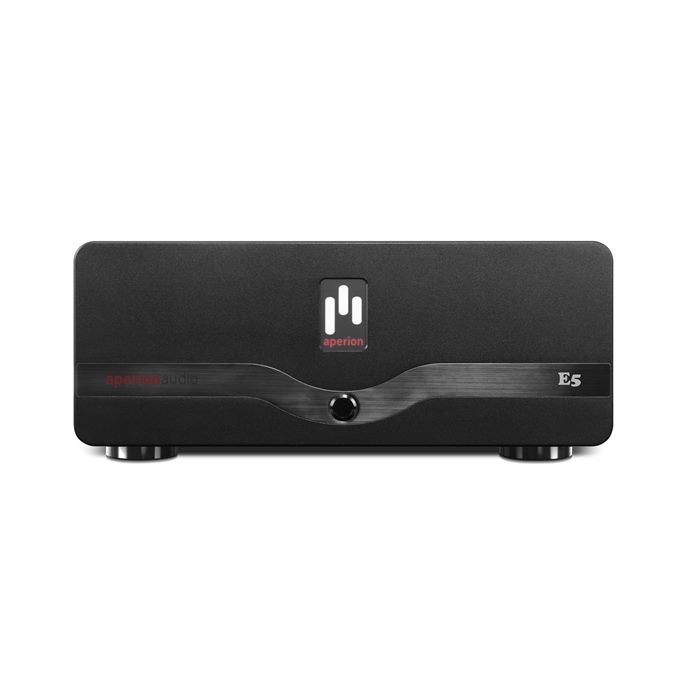
Why it's on this list: The five-channel step, for taking an entire 5.0 or 5.1 speaker layout — front L/C/R plus both surrounds — off the receiver's amp section at once, rather than upgrading channels one amp at a time. It's also a reasonable way to cover a front L/C/R plus a pair of Atmos height speakers, leaving the receiver's own amp channels free for rear surrounds. At 190W per channel into 8Ω across all five channels, it matches the standard E3's per-channel power, just spread across two more channels.
Worth knowing: As of this writing, the E5 is listed as out of stock on Aperion's site with a "notify me" waitlist rather than an add-to-cart button. We're including it here because it's a real part of the lineup and worth planning around, but check current availability before counting on it — the E3 and E3H above are both in stock now if you need something today.
- Power: 190W/ch @ 8Ω, 300W/ch @ 4Ω (all channels driven)
- Design: Class A/B, dual toroidal transformers, 40,000µF capacitance per channel
- Inputs: Balanced XLR and unbalanced RCA per channel
- Cooling: Fully passive — no fans
- Best for: A full 5.0/5.1 layout, or L/C/R plus a pair of Atmos height speakers
- Warranty: 5-year warranty with lifetime support
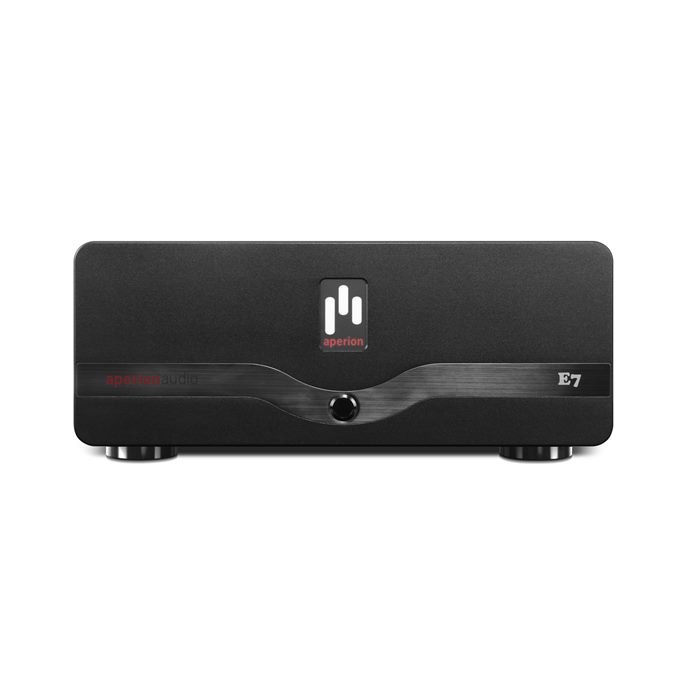
Why it's on this list: The top of the lineup for channel count, and the one to reach for if you want an entire speaker layout — minus the subwoofer, which has its own amp — off the receiver's internal amp section at once. That covers a genuine 7.1 system (front L/C/R, side and rear surrounds), or a 5.1.2 Atmos layout (5.1 bed plus two height channels), all from a single chassis instead of stacking smaller amps. At 170W per channel into 8Ω across all seven channels, it trades a little per-channel headroom against the E3H for far more channels covered per box.
- Power: 170W/ch @ 8Ω, 270W/ch @ 4Ω (all channels driven)
- Design: Class A/B, dual toroidal transformers, 40,000µF capacitance per channel
- Inputs: Balanced XLR and unbalanced RCA per channel
- Cooling: Fully passive — no fans
- Best for: A full 7.1 system, or a 5.1.2 Atmos layout, run entirely off one amp
- Warranty: 3-year warranty with lifetime support
Not sure whether you need a receiver, a processor, or a separates setup like this one? Start with the basics.
How to choose an AV receiver →A more powerful amp only helps if your speakers are placed correctly. Get the soundstage right first.
Speaker placement guide →See our current picks for front three speakers to pair with a dedicated amp like the E3H.
Browse floorstanding speakers →